Austria's Virtual Betting Landscape: Tracing Regulatory Changes and Player Profile Shifts
Gisela Perry · Sep 6, 2026
Austria's Virtual Betting Landscape: Tracing Regulatory Changes and Player Profile Shifts
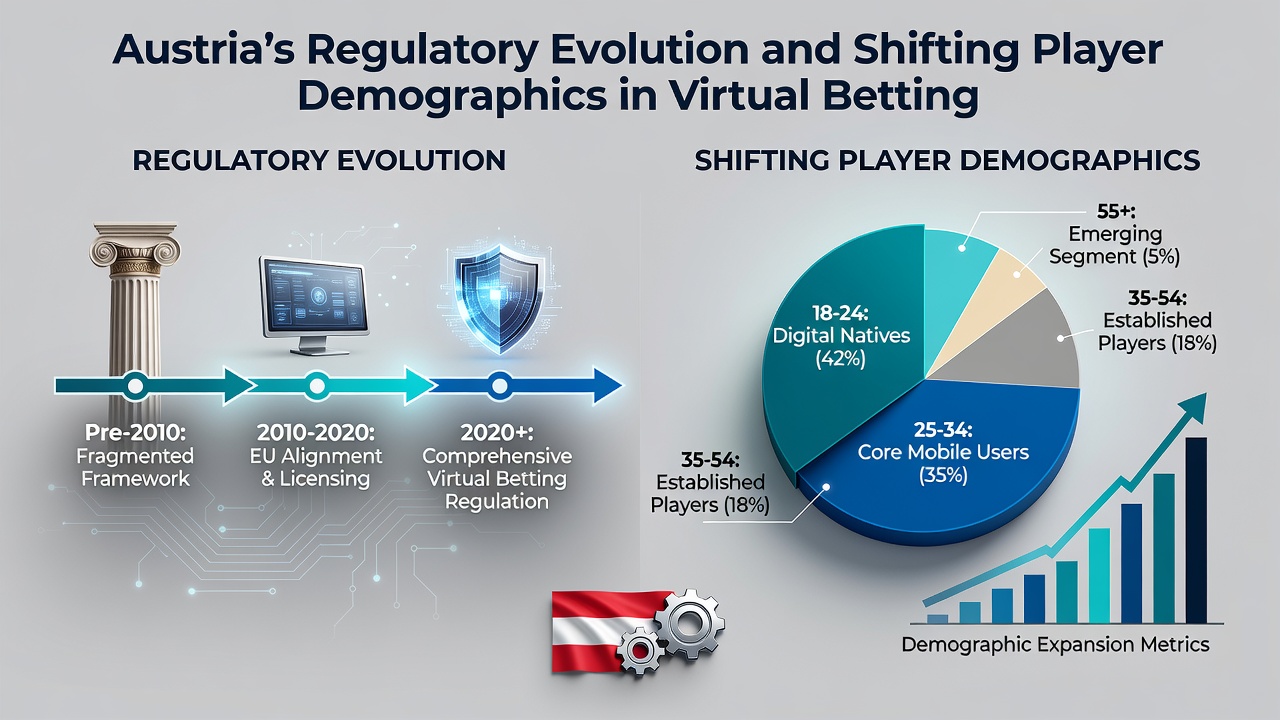
Austria has built its approach to virtual betting through successive layers of national legislation and alignment with broader European Union directives, and these adjustments continue to shape market access as well as participant characteristics. Observers note that early restrictions focused on state-controlled lotteries gave way to licensing frameworks that opened pathways for private operators while maintaining strict oversight on advertising and player protections.
Data from government records shows the 2010s brought incremental reforms that required operators to secure concessions through the Austrian Federal Ministry of Finance, and those rules established baseline standards for responsible gaming measures. By the early 2020s further refinements addressed online payment processing and age verification protocols, creating a clearer boundary between legal and unlicensed activities.
Key Milestones in the Regulatory Timeline
Legislative updates in 2021 introduced provisions that required foreign-facing platforms to obtain domestic authorization if they targeted Austrian residents, and enforcement actions followed against non-compliant sites. Researchers at European academic institutions have documented how these steps reduced the share of unregulated activity, while licensed volumes grew steadily. In September 2026 authorities plan additional reporting requirements that will mandate quarterly submission of player activity data to monitor compliance with spending limits and self-exclusion programs.
Industry associations such as the European Gaming and Betting Association have published summaries indicating that these layered rules favor operators with robust technical infrastructure for real-time monitoring. The regulatory model also incorporates taxation mechanisms that allocate a portion of revenues to public health initiatives related to gambling awareness.
Shifts in Participant Demographics
Official statistics reveal a gradual broadening of the player base since the introduction of licensed virtual betting options. Participation rates among adults aged 25 to 34 have risen more sharply than in older cohorts, reflecting greater comfort with digital payment methods and mobile interfaces. Figures released by national statistical offices show that urban residents in Vienna and Graz account for a larger share of registered accounts compared with rural districts, though the gap has narrowed as broadband access expanded.

Gender distribution has also evolved, with data indicating a slow increase in female participation following the rollout of targeted responsible gaming campaigns. University-led studies in neighboring EU member states have found similar patterns when regulatory clarity improves, suggesting that transparent licensing can attract a wider cross-section of the adult population. Income-level analyses point to steady representation across middle-income brackets, whereas very high or very low earners remain smaller segments within the licensed market.
Interaction Between Regulation and User Profiles
Enforcement of age-verification and deposit-limit rules appears to influence retention rates differently across age groups. Younger adults demonstrate higher churn when limits trigger, according to aggregated reports from licensed operators, while older participants show longer session durations within compliant environments. Geographic data further illustrates that regions with stronger public transport links to major cities record higher account registration numbers, possibly due to greater exposure to promotional materials permitted under current advertising guidelines.
Cross-border comparisons with regulatory frameworks in Canada and Australia reveal that Austria's emphasis on centralized reporting has produced faster identification of high-risk play patterns. Academic papers from Canadian research centers note that similar data-collection mandates helped refine harm-minimization tools without substantially altering overall participation volumes.
Emerging Patterns and Future Outlook
Projections prepared by market analysts for the period beyond September 2026 anticipate continued growth in mobile-based participation, driven by incremental improvements in network coverage across alpine communities. Regulatory bodies have signaled interest in exploring blockchain-based verification methods to streamline identity checks while preserving data-protection standards required under EU law.
One study released by an Austrian university consortium tracked account creation trends and found that educational campaigns delivered through official channels correlate with increased uptake of voluntary deposit limits. These findings align with observations from other EU jurisdictions that have implemented comparable transparency measures.
Conclusion
Austria's regulatory progression has established a structured environment for virtual betting that continues to influence who participates and how they engage with licensed platforms. Demographic data collected through official channels documents measurable changes in age distribution, gender balance, and regional representation, and these shifts coincide with successive refinements to licensing and monitoring requirements. As September 2026 approaches, upcoming reporting obligations are expected to supply further detail on player behavior patterns, supporting evidence-based adjustments to existing rules.